Analysis
Breaking News
Culture
Industry
Lifestyle
News
Opinion
Politics
Regional
Sports
Top Stories
Uncategorized

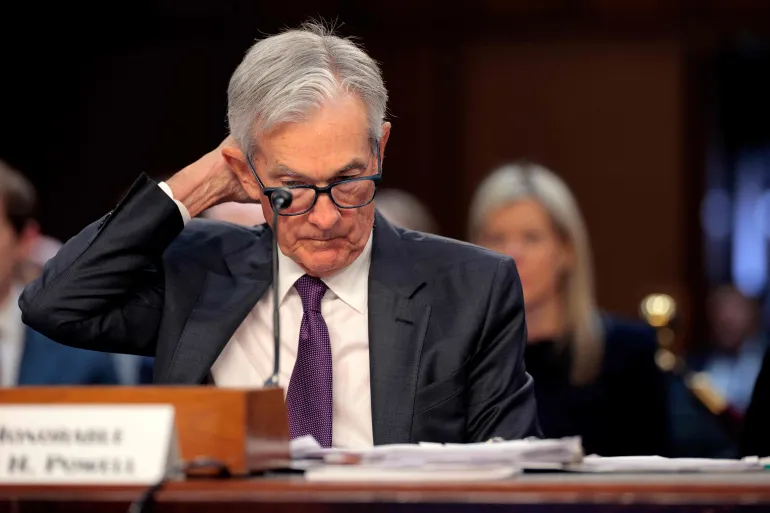
US Federal Reserve Chairman Jerome Powell (French)
The US Federal Reserve fixed interest rates at a range of 3.5% and 3.75% at the first meeting of the US central bank’s Open Market Committee (FOMC) in charge of monetary policy.
Federal Reserve Chair Jerome Powell said at a conference after the decision was announced that the US federal budget deficit was “on an unsustainable trajectory” and called for “this to be addressed quickly”.
He added that the United States has a very large deficit with near-full employment.
He noted that inflation remains “fairly high” compared to the central bank’s 2% target, but noted a decline in inflation in the services sector, adding: “We are committed to supporting full employment, sustainably bringing inflation down to our 2% target, and keeping inflation expectations stable in the long term.”
He noted that the central bank believes that the “exceedance” of inflation is the result of the sweeping tariffs imposed by the Trump administration, not demand.
He predicted that the impact of tariffs on commodity prices would peak and then fall this year, and that it would be a temporary rise in prices.
Powell told reporters: “We believe that tariffs will probably continue, and that the price increases will be temporary.”
The Lisa Cook case
On the independence of the U.S. central bank, Powell said President Donald Trump’s attempt to impeach Federal Reserve governor Lisa Cook may be the “most important legal issue” in the Fed’s 113-year history.
Regarding his investigation by the U.S. Department of Justice, Powell said he had “nothing to add” to the letter he posted on the Federal Reserve’s X account about what he saw as political threats to the central bank’s independence.
Although Powell’s term as Fed chairman ended in May, his membership on the board does not end until two years later.
Asked if he had made a decision about continuing as a member of the Federal Reserve, Powell replied: “No. I don’t have anything to answer you today about it.”
Inflation
Inflation in the United States stabilized at 2.7% in December, exceeding the Federal Reserve’s target, but in line with economists’ expectations.
Meanwhile, this month’s jobs data came in lower than expected, signaling a slowing labor market.
According to the U.S. Commerce Department’s Bureau of Economic Analysis, consumer spending, which accounts for more than two-thirds of economic activity, rose 0.5% in November after rising at the same rate in October 2025.

But the surge in economic growth seen in last Thursday’s reports was not accompanied by a strong labor market, according to Reuters.
Experts say President Donald Trump’s trade and immigration policies have reduced demand for labor, as well as companies are unsure of their staffing needs as they invest heavily in artificial intelligence, limiting hiring.
U.S. job growth slowed more than expected in December amid corporate warnings about hiring due to import tariffs and increased investment in artificial intelligence, while the unemployment rate fell to 4.4%.
According to data from the U.S. Bureau of Labor Statistics, nonfarm payrolls increased by 50,000 jobs last month after rising by 56,000 in November following a downward adjustment.
Pressure on the Fed
Wednesday’s interest rate decision comes at a time when the Trump administration’s criminal investigation into Bank of England Chairman Jerome Powell is casting a shadow over the U.S. economic landscape, amid ongoing efforts to fire Lisa Cook and appoint a successor to the Federal Reserve chairman next May.
That process is making significant progress when Trump announces, perhaps this week, his nominee to succeed Powell.
After this meeting, two monetary policy meetings remain scheduled in Powell’s eight-year tenure as the world’s top central banker, but the smooth transition has usually become a potential period of turmoil.
This month, the Justice Department launched a criminal investigation into Powell, over a $2.5 billion renovation of the central bank’s headquarters.
Powell said in response to the investigation: “This new threat is not related to my testimony last June, nor to the renovation of the Federal Reserve buildings. “It’s about whether the Fed will be able to continue to set interest rates based on evidence and economic conditions, or whether monetary policy will be subject to political pressure or intimidation.”
In December, the Federal Reserve cut its benchmark interest rate by a quarter of a percentage point to between 3.5% and 3.75%, marking a three-year low, marking the third consecutive cut in borrowing costs.
With all these developments underway, the Fed’s independence seems to be secondary to the monetary policy debate, although analysts expect at this stage that the central bank’s institutional controls will remain in place.