Analysis
Breaking News
Culture
Industry
Lifestyle
News
Opinion
Politics
Regional
Sports
Top Stories
Uncategorized

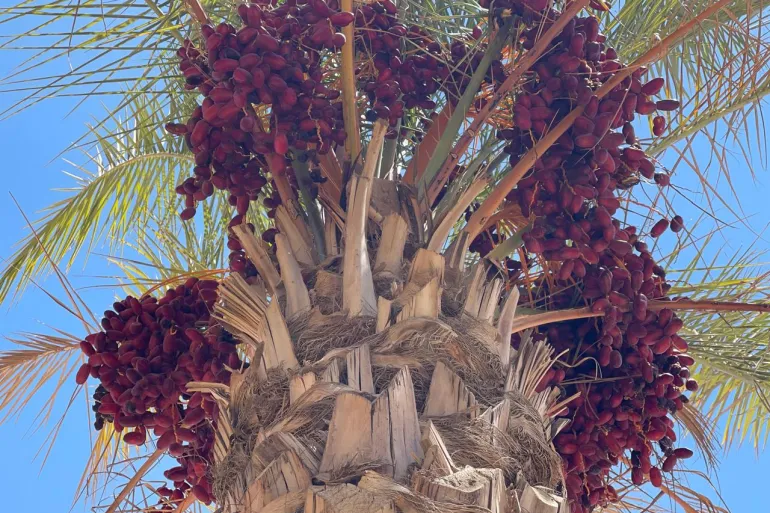
Egypt accounts for one-fifth of global date production with a total of two million tons per year (Al Jazeera)
Egypt is at the forefront of date production globally, accounting for about one-fifth of the world’s production with a total of nearly two million tons per year, and more than 24 million palm trees, but this quantitative leadership is not reflected in parallel on the map of export revenues or influence in international markets, which raises questions about the reasons for the gap between the abundance of production and the weak economic value of the date chain.
This problem came back to the forefront with the conclusion of the sixth edition of the “Cairo Date Festival”, where the Ministry of Agriculture and Land Reclamation confirmed that Egypt continues to lead global production, according to an official statement issued by the Council of Ministers, at a time when data from the Food and Agriculture Organization of the United Nations (FAO) indicate that quantitative leadership continues to face structural challenges that limit the maximization of external returns.
Gap between production and yield
The data related to the Egyptian date market reveal a set of factors that explain the limited export yield despite the large production, the most prominent of which are:
- Poor manufacturing and added value.
- Shortcomings of sorting and packaging systems.
- The challenges of adhering to international quality and traceability standards.
- Lack of sophisticated storage and supply chains.
- The local market has taken over the bulk of production.
- The absence of a strong global marketing brand for Egyptian dates.
However, recent years have seen a gradual shift in government policies from focusing on “productive mass” to maximizing “market value.”
With the modernization of about 200 industrial facilities, the development of packaging chains, and the expansion of distribution outlets across multiple continents, Egypt has advanced in the ranking of date exporting countries from the
According to official data, Egyptian date exports during 2024 and 2025 amounted to about $105 million, with a total of 88 thousand tons, which figures are still limited compared to the volume of total production, as exports do not exceed about 2.7% of the total annual production.
Ministry of Agriculture Plan
The official spokesman of the Egyptian Ministry of Agriculture, Khaled Gad, enumerated in statements to Al Jazeera Net the most prominent axes of the ministry’s plan to promote the palm and date sector, enhance added value and increase exports to international markets, and the following are the most important of these axes:
- Developing more than 200 factories and packaging centers with government and private support.
- Attracting new private sector investment in production and export.
- Expansion of production through the East Owainat farm, which includes 2.5 million palm trees.
- Introducing new varieties and improving agricultural processes to increase palm productivity by more than 25%.
- Implementing the 2024-2029 strategy in cooperation with FAO for the development of the palm sector and date production.
- Raising the value of fresh and processed date exports to $250 million annually.
- Reduce loss to 15% and reduce supply chain cost by 20%.
The spokesman of the Ministry of Agriculture predicted that Egypt will advance in the list of the most exporting countries during the next three years, as Egypt has a large system for the production of dates in the private and government sectors, whether from seedlings or from productive farms, which enhances the competitiveness of the Egyptian product in the global markets.

Variety and Production Map
Egypt has a wide variety of date varieties, but the production structure still tends towards traditional varieties that are mainly geared towards the local market.
In the Delta (north) and the Nile Valley (central), wet varieties such as zaghloul, samani and hayani are prevalent, which are high in yield but have limited export capacity due to their short shelf life.
Semi-dry varieties, especially the Siwi (Saidi), Ajlani and Omari, are the backbone of traditional exports thanks to their storage and tolerance, especially towards the markets of the Maghreb and some Asian countries.
In the south of the country, dry date varieties such as scotty, bermuda and malkabi are common.
On the other hand, the Egyptian state has recently expanded the cultivation of high-value export varieties such as Al-Majdul, Al-Barhi, Al-Sukkari and Al-Khasas, as part of major reclamation projects in Toshka (far south), East Al-Owainat and the New Valley (southwest), with the aim of improving the quality of exports and increasing economic returns.

Challenges for exporters
A number of exporters and distributors of dates in Egypt believe that the limited exports compared to the large production are due to regulatory and marketing factors, which make local consumption the main destination of the crop.
Abdel Razek Abu Younis, owner of the Kayan Date Export Company, said his country has made remarkable progress in production and exports, but exports are still disproportionate to the volume of production, considering that “quantity outweighs quality.”
Speaking to Al Jazeera Net, Abu Younis stressed that strengthening institutional capacities and building guidance and regulatory systems for producers and manufacturers, with a focus on globally marketable items, is a key step to raise competitiveness.
Fathi Aboul Fotouh, owner of Al-Iman Dates Company, called for the establishment of a specialized regulatory body to manage the entire value chain of the date sector, starting from palm service and agriculture, through manufacturing and packaging, to marketing and export, to ensure that the product meets the requirements of international markets.
Aboul Fotouh pointed out that Southeast Asian markets such as Indonesia, Malaysia and Bangladesh, in addition to Turkey and Morocco, are among the most prominent importing destinations for Egyptian dates, stressing that the local product has a competitive advantage that combines quality and price.

It owns the largest date farm in the world in the East Owainat region in the southwest of the Western Desert, which includes about 2.5 million palm trees planted with 8 of the finest Arab and international varieties, including Al-Barhi, Majdul, Al-Saqa’i, Al-Khalas and Al-Sukkari, in a step that reflects a strategic orientation towards the most valuable varieties in the international markets.
Between the abundance of production and the challenges of marketing and manufacturing, the future of Egyptian dates remains dependent on their ability to move from quantity leadership to value leadership, transforming “brown gold” into a more influential economic tributary in global trade.