Analysis
Breaking News
Culture
Industry
Lifestyle
News
Opinion
Politics
Regional
Sports
Top Stories
Uncategorized

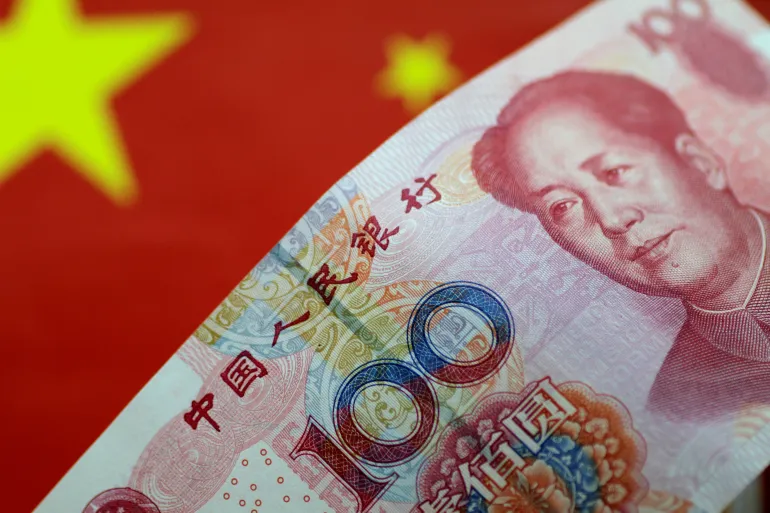
Chinese efforts to boost the yuan’s role internationally (Reuters)
Zambia has become the first African country to allow Chinese mining companies to pay their taxes in yuan, but it may not be the last, according to a report published by Bloomberg, as Beijing seeks to internationalize its currency and reduce its dependence on the U.S. dollar.
The move by Zambia, announced last month, marks “another success for China in pushing for the use of its currency in Africa,” of which Beijing is its largest trading partner.
Earlier, Kenya converted part of its debt to China into yuan, according to Bloomberg, which was denominated in U.S. dollars.
Ethiopia is also in talks with Beijing to make the same move.
Jito Kayomba, an adviser to Zambian President Hakainde Hichilema, told Bloomberg that the yuan is important “in protecting the country from US political shocks.”
“We value the dollar without a doubt, it is the reserve currency, but the higher the demand for it, the greater the risk of currency fluctuations for us,” Kayomba said.

The Zambia model is repeatable
Bloomberg quoted Theodorus Seale, senior adviser at Africa Practices, as saying that Zambia’s announcement on December 31 to allow Chinese companies to pay taxes in yuan “represents a model that China is seeking to replicate in Africa.”
Seal said Beijing is seeking to “de-monopolie” the structure of the global financial system, referring to the U.S. dollar’s dominance of international exchanges.
He added that African countries are moving towards “monetary multilateralism,” which will strengthen China’s strategic position in Africa and its relations with its most important trade partners among African countries.
The yuan currently accounts for only 2% of the world’s monetary reserves, highlighting the importance of Africa’s role in China’s efforts to strengthen its global role and reduce dependence on the U.S. financial system.
Beijing is a major creditor to African countries, including Zambia, and is one of the largest buyers of many African products.

Co-benefits
The Bloomberg report explained that boosting the use of the yuan in Africa brings gains for both sides, China and Africa, at a time when Washington seeks to use the dollar as a weapon against its adversaries, through sanctions and other restrictions.
Bloomberg pointed to concerns related to the dollar’s dominance after the U.S. Department of Justice indicted Federal Reserve Chairman Jerome Powell.
Many see the move as an attempt by US President Donald Trump’s administration to pressure the Federal Reserve to cut interest rates, threatening its independence and shaking confidence in US dollar-denominated assets, according to Bloomberg.
Although China has not exerted “explicit pressure” on African governments to increase its use of the yuan, Bloomberg reports, Beijing’s efforts to boost its currency’s international standing have escalated since Chinese President Xi Jinping in early 2024 called for a strong currency for his country to become a “financial powerhouse.”
The yuan loan rate is about 200 basis points lower than the dollar loan rate, and is an important attraction for investors.
China ranks first globally in terms of the volume of its exports, which helps boost the international use of the Chinese currency in trade finance, with its share of global trade currently rising to around 7%, according to data provided by the People’s Bank of China.