Analysis
Breaking News
Culture
Industry
Lifestyle
News
Opinion
Politics
Regional
Sports
Top Stories
Uncategorized

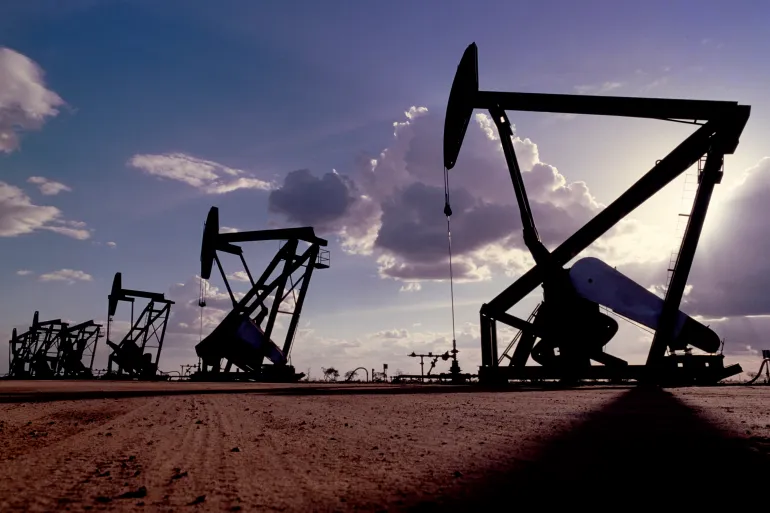
Oil benefited from escalating US-Iran attacks (Getty)
Oil rose, gold prices fell Wall Street indices rose on Monday, in a session that reflected the reaction of markets to renewed strikes between the United States and Iran, and then the return of bets on containing the escalation after the two sides agreed to stop the latest wave of attacks and resume talks on the Strait of Hormuz.
At the time of writing, Brent crude was trading near $73 per barrel, US crude around $70, while gold fell to around $4013 an ounce, while major US indices rose supported by improved sentiment and a rebound in technology stocks.
Tensions were renewed over the weekend after an exchange of strikes between Washington and Tehran, with Iran firing missiles and drones at U.S. military sites in Bahrain and Kuwait, after U.S. President Donald Trump threatened to eliminate Iran’s leadership if it did not abide by the agreement to end the war, before a U.S. official said the two sides had agreed to halt the latest wave of hostilities and resume talks on the Strait of Hormuz.
Oil regains risk premium
Oil prices rose on Monday after the counter-attacks showed the fragility of the interim agreement between Washington and Tehran to end the war, but gains remained limited by expectations of a continued recovery in energy shipments through the Strait of Hormuz.
It reached about $72.94 per barrel, while US crude climbed to about $70.44 per barrel, with prices remaining above Friday’s closes of $71.99 for Brent and $69.23 for US crude.

Reuters quoted XM brokerage firm Achilles Georgopoulos as saying that the risk premium associated with the war may remain in place until the situation in the Middle East calms down completely, and as the pace of news related to tensions subsides.
Brent crude fell 10.6% last week, in its third straight weekly loss, after oil shipments through the Strait of Hormuz rose to the highest level since the start of the U.S.-Israeli war on Iran in late February.
ING analysts say the market still faces significant risks, but traders are now focused on what the continued recovery of oil flows means for the global balance, arguing that a slow supply recovery could keep the risk of rising prices lingering.
Hormuz between danger and recovery
The Strait of Hormuz remains the center of tension in energy markets, as it is a major transit channel for oil and gas exports from the Gulf. Despite new attacks and renewed strikes between the United States and Iran, shipping data showed that Middle East oil and liquefied natural gas producers (LNG) were continuing to load.
Saudi Aramco resumed crude oil loading in Ras Tanura on Friday after a nearly four-month hiatus, and loading operations continued even after a company helicopter crashed on Sunday in Ras Tanura, killing 14 people and the reasons for which are still unknown.
The recent oil movement reflects the current market paradox: the attacks immediately raise the risk premium, but continued shipping and the return of loading from major ports limit price jumps, making any military or diplomatic update capable of moving prices in both directions during the same session.
Gold falls despite tensions
Contrary to the traditional pattern that drives investors to gold in times of crisis, the precious metal fell on Monday under pressure from expectations of a Federal Reserve rate hike, amid fears that rising oil will fuel inflation and keep U.S. monetary policy tighter.
Gold fell to $4013.07 an ounce, down nearly 0.9% on the day, and the precious metal remained on track for a fourth straight monthly loss.
Tim Water, chief market analyst at KCM Trade, said the renewed skirmishes between the United States and Iran over the weekend had increased uncertainty about the continued decline in oil prices, inflation expectations and interest rates.

Gold usually loses some of its appeal when interest rates rise, because it does not generate a return, and the rise in oil may prompt investors to reprice inflation expectations and monetary policy in the United States.
In other precious metals, silver fell to $57.72 an ounce, platinum fell to $1563.55, and palladium fell to $1196.09, at the time of writing.
A bet on calm
In the US stock market, cautious optimism prevailed in early trading, with Wall Street’s main indices opening higher after the latest wave of attacks between Washington and Tehran halted sentiment, despite continued concern over the fragility of the interim deal.
The Dow Jones Industrial Average rose 324 points, or 0.6%, the S&P 500 climbed 0.6% to 7400 points, and the Nasdaq Composite advanced about 1%, supported by a rebound in technology stocks after a wave of losses.
The rally came after a difficult week for technology stocks, with the Nasdaq and S&P 500 recording five consecutive sessions of declines, while the market was buoyed by signs that talks between Washington and Tehran did not collapse despite the reciprocal blows.