Analysis
Breaking News
Culture
Industry
Lifestyle
News
Opinion
Politics
Regional
Sports
Top Stories
Uncategorized

Arab households’ spending rises in Ramadan by 25% to 50% (Al Jazeera – Artificial Intelligence)
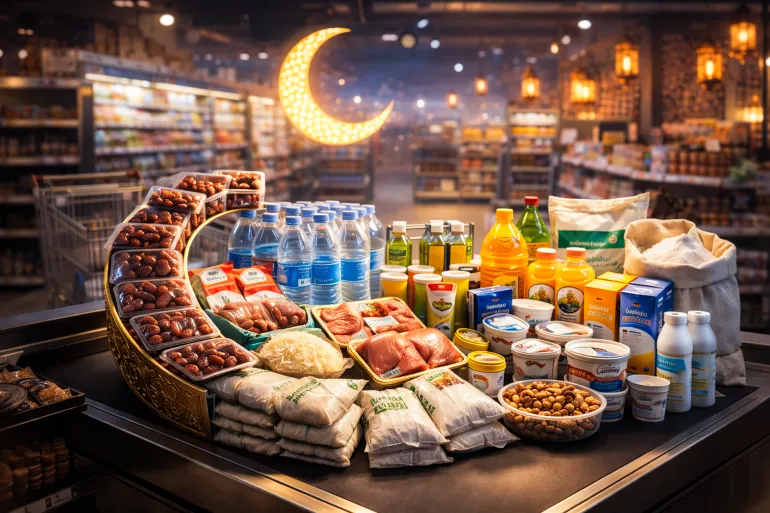
During the holy month of Ramadan, markets in Arab countries are witnessing a fundamental change in consumption patterns, as squares and malls turn into restless beehives.
Despite the economic challenges, food spending remains exceptional, with market data indicating that household spending has increased by between 25% and 50% compared to the rest of the year, according to an economic study issued by the Dubai Chamber of Commerce and Industry and official data issued by the Ministry of Supply and the Trade Development Authority in Egypt.
Egypt’s Internal Trade Development Authority estimates the volume of consumption of food commodities during Ramadan at about 100 billion pounds ($2 billion), which is double the consumption in the rest of the months.
In this detailed report, Al Jazeera Net reviews a list of the 10 most consumed commodities in the Arab world, according to the prevailing consumption pattern.
1- Dates. Culture and Sunnah
It is not possible to talk about Ramadan without starting with dates, as they are the commodity that enjoys an absolute Arab and Islamic consensus following the Sunnah of the Prophet, and the Gulf countries,Iraq, and Egypt are among the largest consumers and influencers in this market.
Date sales peak annually (about 90% of retail sales for some items) in the weeks leading up to the holy month, according to the Saudi Ministry of Environment, Water and Agriculture.
Items such as “diabetes”, “majdal” and “khalas” are at the top of the list of preferences, transforming from a mere fruit into luxury gifts exchanged between families.

2- Rice. Meal Backbone
Rice is the first strategic commodity in most Arab countries, specifically in the Gulf countries, Egypt, Iraq, and the Levant.
- In the Gulf, basmati rice (produced in Pakistan and India) is the main ingredient in the “Kabsa” and “Mandi” diets.
- In Egypt, Egyptians consume large quantities of rice during the holy month, as it is included in “mahshi” and side dishes.
3- Meat and poultry. “Invitations” Protein
Meat is a measure of Ramadan spending, and despite its rising prices globally, demand for meat is hitting record highs this month.
- Poultry: The demand for poultry during Ramadan is up to 45% higher than normal rates, according to data from Egypt’s Internal Trade Development Authority, as families prefer it as an economical and basic alternative to daily meals.
- Red meat: Sheep are being consumed in the Gulf for the preparation of “thraid” and “haris”, while the demand for beef is increasing in Egypt and the Levant for the preparation of tagines and mansaf.
Although per capita consumption of red meat has declined in some countries due to inflation (between 8 and 9 kilograms per year), according to reports by Egyptian chambers of commerce, Ramadan remains the peak season for the consumption of red meat.
4- Bottled water. “Water the fasting person”
Some may be surprised that bottled water enters this list, but it is the best-selling commodity in terms of “number of units.”
- Household consumption: It rises by a large percentage to compensate for fasting periods.
- Sadaqat: The biggest driver of this commodity is “mosque watering”, where hundreds of millions of small bottles are purchased to be distributed in Taraweeh and Qiyam prayers, making it at the top of the sales list in the beverage category.
The bottled water market in Saudi Arabia alone was valued at $2.87 billion for 2025, with a significant increase in the consumption of small retail bottles during Ramadan due to alms and their distribution in mosques, according to a report by market research firm Mordor Intelligence.

5- Vegetable oils and ghee
Ramadan is the month of “fried” par excellence, samosas in the Gulf, brik in Tunisia, and Luqaimat and Qatayef in many countries of the Arab Levant, all of which rely on oils and ghee.
Oil companies are recording an increase in demand, with huge amounts of frying oil being consumed in homes and popular restaurants at rates exceeding 50%, according to consumer goods sales reports.
6- Flour Pastry Base
The flour trade is booming for the preparation of homemade bread and pastries.
- Maghreb: Semolina is emerging as a top commodity for the preparation of couscous, Maison bread and other meals.
- Mashreq: Demand for premium white flour for confectionery, samosa dough and qatayef is on the rise.
7- Ramadan juices and drinks
There are drinks that only appear in Ramadan and are part of the cultural identity of the holy month:
- Femto: The most popular drink in the Gulf by far the most popular drink, with sales of around 30 million bottles a year, most of which are sold during the Ramadan season alone, according to the manufacturer’s reports.
- Traditional beverages such as Qamar al-Din, licorice, and tamarind in Egypt and the Levant are commodities that are often in demand that outstrip supply.
8- Sugar. Dessert Base
Sugar is included in almost everything during Ramadan, from sweetening juices to preparing sweets to making “tar” or “shirra” (sugar syrup) with which oriental sweets (kunafeh, basbousa, and qatayef) are watered.
Sugar consumption in some Arab countries is estimated at thousands of additional tons allocated for Ramadan sweets alone.

9- Dairy products. Suhoor companion
Yogurt is the best-selling item in the Suhoor meal for its benefits in digestion and reducing thirst, and major dairy companies in the region are witnessing remarkable revenue growth during the Ramadan-related quarter by percentages sometimes exceeding 50%, according to a manufacturer’s report.
Cheeses and cream are also in high demand for dessert and pastry fillings.
10- Nuts and Yamesh Ramadan
Nuts include walnuts, almonds, pistachios, and dried fruits such as figs and apricots.
In Egypt, the yamish market is one of the oldest traditions, with Egyptians spending billions of pounds a year on these goods, which are used in “khashaf” (a popular Ramadan drink) and to decorate dishes.
The Dilemma of Food Waste
Despite this abundance, economic and environmental experts warn of the phenomenon of “waste”. According to the Food and Agriculture Organization of the United Nations (FAO), approximately 25 to 50 per cent of food prepared during Ramadan in some Arab countries ends up in waste.
In the Arab world, Ramadan remains an economic season par excellence, as social customs are intertwined with food needs.
Despite the variety of commodities from rice and meat to bottled water, the goal remains the same: to celebrate the holy month and honour the guest, amid growing calls to transform this consumption momentum into sustainable behaviour that reduces waste and maximises the use of resources.