Analysis
Breaking News
Culture
Industry
Lifestyle
News
Opinion
Politics
Regional
Sports
Top Stories
Uncategorized

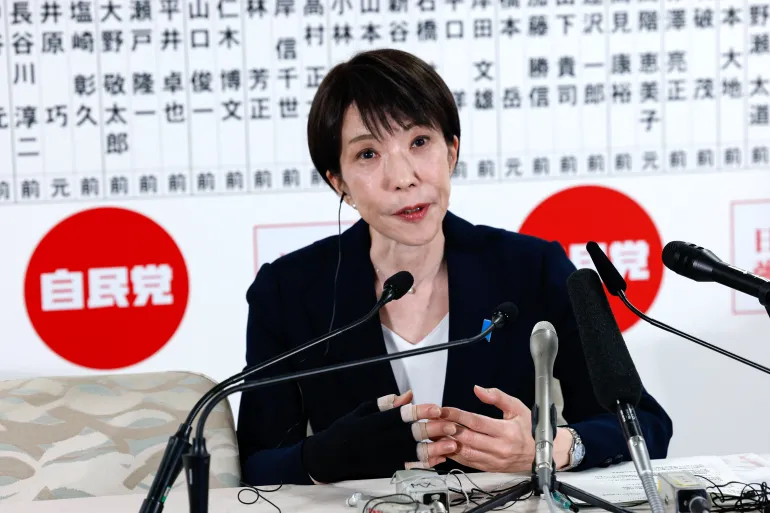
Sanai Takeichi leads her party to a landslide victory in early general election (French)
Japanese Prime Minister Sanai Takaichi is seeking to bring about sweeping changes in her country’s economy through plans she worked to implement within 110 days of her premiership, and she worked to win popular support in Japan’s general election on Sunday.
Takachi’s ruling coalition won a landslide victory on Sunday, and less than two hours after polls closed, Takaichi’s Free Democratic Party (FDP) alone surpassed the 233-seat threshold needed to secure a majority in the 465-seat parliament.
The New York Times, reporting from Tokyo, said the early elections called by Takaichi represented a “referendum” on whether her economic plans had voter support.
Takaichi is Japan’s first female prime minister, and she says she follows in the example of the late British Prime Minister Margaret Thatcher, nicknamed the “Iron Woman.”

Increased expenses
Takaichi is planning a broad increase in public expenditures to support economic growth, but she has also raised concerns that Japan’s massive debt will mount.
Takaichi passed a record supplementary budget last year as part of its efforts to break the “long-term deflationary cycle,” as described by the New York Times.
Takaichi has been quick to draw up plans to increase military spending to counter China’s growing power and support state-led investments in artificial intelligence and semiconductor manufacturing.
But the key question remains how much of an impact this significant spending expansion will have on the public budget, especially since Takaichi has vowed to accelerate discussions on a two-year suspension of an 8% tax on food sales, without issuing new debt to fund the measure.
Takaichi expects the ruling Free Democratic Party (FDP) to go ahead with a plan to suspend sales tax on foodstuffs, as outlined in the party’s campaign pledge, but said details needed to be discussed with other parties.
“It is necessary to speed up discussions” on the suspension of the consumption tax rate, she said in a television interview.

Market Fears
Takaichi’s plans to suspend the sales tax on food commodities have sent interest rates on Japanese Treasuries skyrocketing amid investor concerns about the Japanese government’s ability to fund its plans to suspend the tax.
The British newspaper The Guardian reported that Takaichi’s plan to freeze the sales tax would lead to a reduction in revenues in Japan’s general budget by $30 billion (about 5 trillion yen), and the cost of the plan to stimulate economic growth is equivalent to $135 billion.
Takaichi’s plans have raised concerns in financial markets due to the enormity of Japan’s government debt, which is twice the size of Japan’s GDP, making it the largest indebted country among advanced economies.
Japan’s GDP was about $4 trillion in 2024, according to the latest data available from the World Bank, while Japan’s economic growth rate in 2024 did not exceed about 0.1%, a weak percentage that explains why Takaichi is pursuing programs to stimulate growth.
Takaichi won U.S. President Donald Trump’s endorsement last week for her economic reform program, and Japan’s election has received attention and follow-up from China.
Takaichi sparked the biggest rift with China in more than 10 years, weeks after taking office, by speaking publicly about how Tokyo would respond to any possible Chinese attack on Taiwan.