Analysis
Breaking News
Culture
Industry
Lifestyle
News
Opinion
Politics
Regional
Sports
Top Stories
Uncategorized

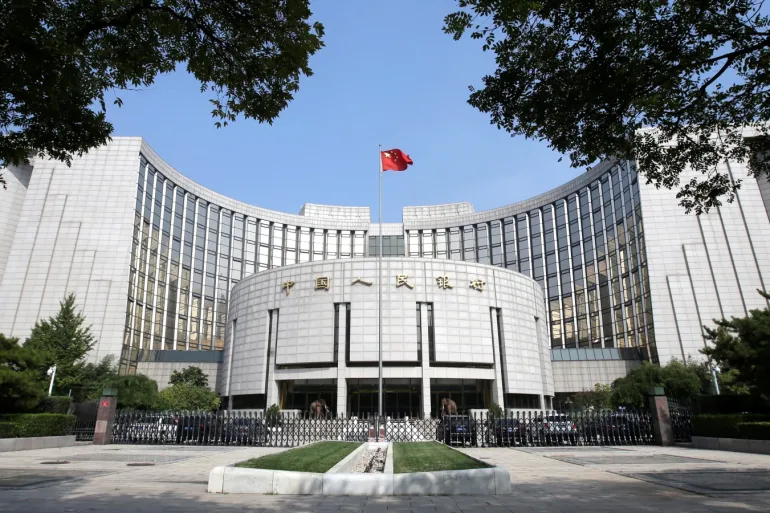
According to several sources, China’s central bank is making efforts to increase the use of the digital yuan inside and outside the country, putting Beijing on a different path from the United States of America towards the future of cryptocurrencies or digital currencies.
Reuters reported that the People’s Bank of China (PBOC) has provided behind-the-scenes incentives and guidance to local banks to expand their trading of the digital yuan, in areas ranging from lottery prize draws to fees related to the consumption of electricity produced by clean energy, as well as budgetary spending.
Chinese banks are being pressured to boost the use of the digital yuan in cross-border transactions, particularly along the Belt and Road Initiative (BRI) tracks, the sources said, as lenders race to develop loans, letters of credit and bonds.
All of the sources asked not to be named because they were not authorized to speak to the media, while the People’s Bank of China did not respond to Reuters’ request for comment.
Lu Li, the vice governor of the People’s Bank of China, wrote an article published in December 2025 in the Financial News newspaper in which he said that “the future of the digital yuan will be based on modern digital payments, means of trading and issuing within the financial system.”
New arrangements
The next steps, according to the Chinese official’s article, are to launch arrangements for a “new generation” of the digital yuan, including “an evaluation framework, a management system, an operating mechanism and an integrated system.”
The action plan stipulates that banks will pay interest on customers’ balances in digital yuan, and that an international digital yuan operations center will be established in Shanghai.
China’s policy towards the digital yuan contrasts with the US approach, with President Donald Trump embracing stablecoins (pegged to the dollar) and banning the central bank’s digital currency trading domestically.
Some industry sources said Beijing’s move was partly due to its desire to reduce its reliance on a global payments system dominated by Western institutions, which is based on the dollar as the world’s reserve currency.
An industry source explained that the digital yuan is a technological pillar that helps ensure that China’s international trade flows continue uninterrupted during any future geopolitical shocks, a concern underscored by external instability related to the U.S.-Israeli war on Iran.
According to the latest official data, cumulative transactions in digital yuan stood at 16.7 trillion yuan (about $2.47 trillion) as of last November since it was first introduced in 2019, compared with 279 trillion yuan ($41.2 billion) in Chinese UnionPay card transactions in 2025 alone.

Digital Yuan Accounts
Earlier this year, China began allowing banks to pay interest on holding digital yuan accounts, a major shift in Beijing’s fiscal policy. In April, the authorities more than doubled the number of banks licensed to pay these interest to 22.
A well-informed source in the fintech sector that provides technology services to banks said that deposit balances and account numbers in digital yuan are now key indicators in banks’ valuation, explaining that the goal is to build a critical mass and a system that attracts wider participation.
To boost local use, China’s central bank is testing apps that use “smart contracts,” built-in software that implements automatic payments when predetermined conditions are met.
Government Spending Programs
Industry sources said the pilot projects include the withdrawal of lottery money, prepaid cards, government financial spending and supply chain financing.
Authorities are also testing the use of the digital yuan to curb medical insurance fraud and track green electricity consumption, leveraging its ability to accurately track money flows, the sources said.
A source at one of China’s e-payment companies said the country’s local governments have set digital targets to adopt the use of the digital yuan and are currently testing pilot internal use cases, including salary payments and healthcare payments.
According to informed sources, the People’s Bank of China is also considering establishing a clearing house (a central financial intermediary between the seller and the buyer to ensure the completion of financial and commercial transactions) similar to the China UnionPay network to process digital yuan transactions between all banks and improve efficiency.