Analysis
Breaking News
Culture
Industry
Lifestyle
News
Opinion
Politics
Regional
Sports
Top Stories
Uncategorized

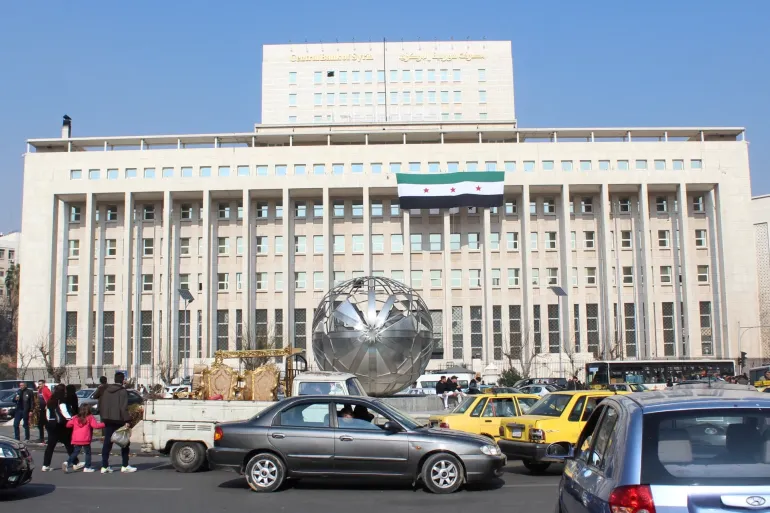
Syria’s Central Bank announced the replacement of about 80% of its target monetary mass in July
Today, Thursday, July 30, the deadline for the replacement of old Syrian banknotes ends, as these banknotes will lose their exemption power starting from July 31, and are no longer legally valid for circulation or settlement of transactions, after a process that has extended since the beginning of the year and included successive extensions that gave holders of the old currency additional time to replace them.
With the expiration of the deadline, dealing with old banknotes will no longer be available through banks and exchange companies, but will move to a more stringent phase of 5 years, which will be implemented exclusively through the Central Bank of Syria in Damascus, according to conditions that include the demand for at least 100 banknotes, and subjecting them to scrutiny before transferring their value to a bank account in the new Syrian pound.
Setting a limited window and then closing it does not appear to be just a regulatory measure to complete the swap process, as the move has broader goals related to redrawing the country’s cash flow map, measuring the size of the actual mass in circulation, forcing hoard money to appear, and reducing the period during which two currencies coexist in the same market.
The new phase also gives authorities greater ability to document the owners of the remaining amounts, as the process has shifted from a direct exchange through a relatively wide network to a centralized banking procedure that requires accounting, identification, and auditing, which may help to detect some of the funds of unknown origin.
The End of Coexistence Between Two Currencies
Syrian authorities began withdrawing the old currency and adopting the new lira on January 1, 2026, in a process aimed at ending the circulation of previous banknotes and easing the burden resulting from the multiplicity of denominations and the large number of papers used in daily transactions.
In early February, the central bank announced the replacement of about 35 percent of the target cash mass, withdrawing more than 13 trillion old pounds ($1.2 billion) out of about 42 trillion ($3.9 billion) in circulation, before later rising to more than 63 percent, and then, according to announced estimates, approaching 80 percent in July.
Although the deadline was described as short, it has been subject to successive extensions, the most recent of which was a 30-day extension that began in early July, and the Central Bank said it came to give a last chance to groups of citizens who were unable to replace what they had.
Academic and economic researcher Mahmoud Mufid Abdel Karim believes that the short deadline does not represent administrative tightening as much as it constitutes an economic tool, because the continuation of trading two currencies at the same time means the existence of two units of account within the market, and increases the chances of price manipulation through bullish rounding (increasing prices when rounding) or exploiting conversion differences.
Abdel Karim added to Al Jazeera Net that prolonging the period of coexistence between the two currencies also raises the operational and security cost of transporting, sorting, storing and destroying billions of banknotes, as well as increasing the risk of counterfeiting old notes as their legal expiration date approaches.
But the most important function of the grace period, according to Abdel Karim, is to use it as an incentive to get hoarded cash out of homes and informal markets, as the cash holder may not go to the bank voluntarily unless the alternative is to lose the value of what he has altogether.
Abdul Karim: The most important function of the deadline is to use it as an incentive to take the hoarded cash out of homes and informal markets, as the cash holder may not go to the bank voluntarily unless the alternative is to lose the value of what he has completely
On the other hand, economist Abdel Moneim al-Halabi does not see monetary or economic motives that justify the severe tightening of the deadline, with a significant percentage of notes remaining out of the exchange process, especially if the Central Bank’s estimates of the volume of printed or circulating money do not accurately reflect what is actually available inside and outside the country.
Halabi points out that extending the process could allow for a larger percentage of the old currency to be absorbed and reduce the losses that may occur to citizens who have not been able to access exchange points, especially in remote areas or among Syrians living outside the country.

Liquidity Map Outside the Banking System
One of the main objectives of the substitution process is to know the size of the actual monetary mass after years of war,inflation, deterioration, and the outflow of quantities of the lira out of the borders and their circulation in areas that were not entirely under the control of the central government.
The Central Bank may know how much has been printed historically, but it cannot say for sure how much of the notes have remained valid and actually in circulation, or that have been lost, destroyed and taken out of the country, or turned into undeclared cash stocks.
From this perspective, currency replacement is similar to a national cash census, with each banknote revealing a portion of the existing block, while the proportion of non-returning notes is given an indication of the amount of money lost or held outside the formal system.
Abdulkarim said the process was largely successful in measuring the monetary mass, but to a lesser extent in withdrawing liquidity from circulation, explaining that the exchange was mostly based on handing over old notes and acquiring new ones, rather than through mandatory deposits of funds into bank accounts.
He points out that the Central Bank may have counted the money, but it did not necessarily succeed in keeping it inside the banking system, because a person can receive the new cash and return it home, so that the liquidity remains outside the banks as it was before.
The difference between measuring and controlling the monetary mass is essential, as the central bank can only effectively manage the money supply if a larger part of the liquidity passes through deposits and banks, allowing for the use of monetary policy tools such as mandatory reserves,interest rates and bank credit.
For his part, Al-Halabi considered that measuring the monetary mass represents only the first step in a long series of measures, because controlling inflation andthe exchange rate does not depend only on knowing the amount of the pound, but also requires addressing dollarization, pricing chaos, weak market control, and the absence of a banking system capable of transferring monetary policy to the economy.

Central Audit Phase and Replacement Conditions
The post-July 31 phase is more important than the direct replacement phase, because the owners of the old papers will no longer be able to exchange them through multiple branches, and will have to submit their applications to the Central Bank in Damascus.
The instructions stipulate that the number of submitted papers should not be less than 100 papers of any category, and that they must be subject to scrutiny and approval, before transferring their value to a bank account in the new pound, without paying fees, taxes or commissions.
This mechanism moves the process from a direct cash exchange to a documented bank transaction, linked to the name and account of the holder of the funds, and theoretically allows for the review and verification of the source of large sums if indications arise.
Abdel Karim believes that this stage, rather than the exchange through previously open windows, may constitute the real filter for monitoring the funds of unknown origin, because those who now apply for a large amount will be obliged to show their identity, have a bank account, and leave a clear record of the transaction.
But he warns that currency substitution, on its own, is not enough to combat money-laundering, as large holders can split them into smaller amounts and distribute them to multiple people or transactions, a practice known in the area of financial compliance as “splitting” or “sprinkling”.
He stresses that the allocation of funds should be based on a risk-based approach, and not on the assumption of suspicion of all citizens, with declared limits on the amounts that require proof of the source of funds, linking applications to the national number to prevent the division of funds, setting a deadline for deciding on applications and providing the right to appeal.
Ensuring that every successful audit does not turn into automatic tax accountability from previous years may be necessary to encourage legal financiers to emerge, especially in an economy where informal activities have expanded due to war and weak institutions.
But the operation’s ability to detect illicit wealth remains limited, because in a dollarized economy, large sums of money are often stored not in Syrian banknotes, but in dollars, gold, real estate, and assets outside the country.
This is what Abdelkarim explains, noting that it may be more accurate to look at the exchange as a process of cleaning the cash register and defining responsibilities, rather than a comprehensive anti-money laundering or anti-money laundering campaign.
Al-Halabi refuses to view the exchange as a direct tool for detecting illegal funds, warning that linking the process to this goal could lead citizens to fear and hide their money instead of dealing with banks.
It stresses that the fight against illicit funds requires independent institutions, a clear legal framework, judicial oversight and legislative oversight, and trained cadres with independence and the ability to track operations without political or administrative overlap.

Limited impact on inflation and prices
Replacing notes or deleting zeros does not in itself raise purchasing power or lower inflation, because changing the unit of account does not change the real value of wages, prices, and savings as long as they are all converted in the same proportion.
Abdel Karim explained that if prices, wages and cash were divided by 100, the commodity that was sold for about 5,000 pounds (about $0.46) would be worth 50 new pounds (about $0.46), without representing a real decrease in the price or an improvement in the consumer’s income.
On the other hand, he warns of the possibility of behavioral inflationary effects as a result of the upward price rounding, as a commodity whose price after conversion becomes 47.5 new liras (about $0.44) may turn into 50 liras (about $0.46) at reprice, leading to an actual increase that is not related to the printing of new money, but to the method of rewriting prices.
Abdel Karim believes that the inflationary risk in this case is mathematical and behavioral, and not due to an increase in the money supply, pointing out that obliging stores to offer prices in the two currencies during the transition period can reduce manipulation, but its effectiveness depends on the level of its application and monitoring.
The main drivers of inflation in Syria remain linked to the exchange rate, energy costs, dependence on imports, and weak domestic production, rather than to the shape of the currency or the number of zeros printed on it.
Al-Halabi asserts that many traders and importers price goods based on a price of the dollar that is higher than the price announced in the market, which makes the chaos of pricing, dollarization, and weak consumer protection factors more influential factors in inflation than the volume of Syrian currency alone.
The challenge of returning money to banks
The process of replacing the currency technically ends with the removal of old notes from circulation, but it opens up a broader economic file related to the fate of the new liquidity, and the extent to which the government can convert it from hoarding cash to deposits within the banking system.
Abdel Karim believes that the success of the operation is not measured by the number of notes that entered the Central Bank’s coffers, but by the decrease in the percentage of cash outside banks, the reduction of the gap between the official and parallel exchange rates, and the stability of the inflation rate during the next year.
He points out that the stability of liquidity in the form of deposits gives banks greater lending power and allows the central bank to manage monetary policy effectively, while returning them to homes or converting them into dollars and gold deepens the phenomenon of dollarization.
Abdul Karim stressed that completing the process requires broader monetary and banking reforms, including the publication of periodic data on liquidity and deposits, preventing the financing of the budget deficit by issuing cash, developing monetary policy tools, in addition to restructuring public banks, guaranteeing deposits, and modernizing the digital payments system.
Al-Halabi agrees that the development of the banking system, financial inclusion and digital payments are more important in the long term than just replacing papers, calling for encouraging citizens to return to banks, and directing financing to productive sectors, especially agriculture and manufacturing, in order to boost domestic production and reduce inflationary pressures.