Analysis
Breaking News
Culture
Industry
Lifestyle
News
Opinion
Politics
Regional
Sports
Top Stories
Uncategorized

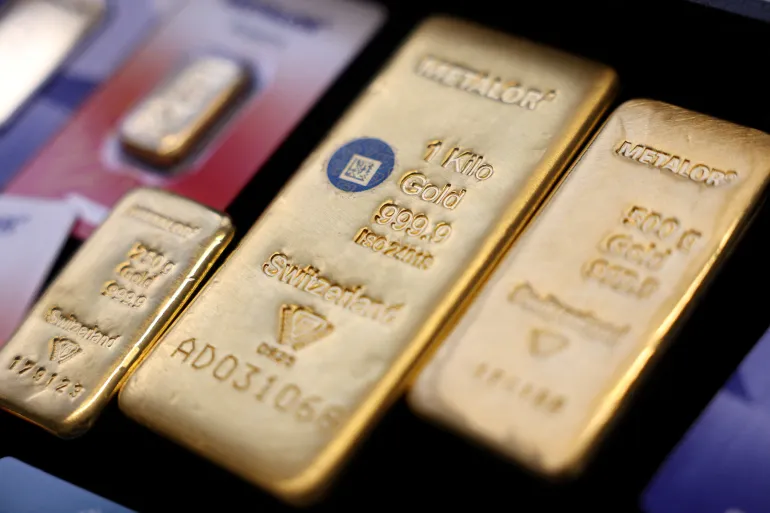
Spot gold rose 0.3% to $4,607.06 an ounce
Gold prices rose on Thursday after falling more than 1% in the previous session, while oil prices continued their decline for the fourth day in a row for Brent crude and the fifth for West Texas Intermediate, as markets awaited developments in US monetary policy and talks on the Strait of Hormuz.
- Spot gold rose 0.3% to $4,607.06 an ounce in morning trading.
- U.S. gold futures also increased 0.11% to $4,658.3, according to Investing.com data.
Investors are awaiting Federal Reserve Chair Kevin Warsh’s speech on Friday at the Jackson Hole Symposium, amid growing debate over the path of interest rates.
U.S. annual inflation unexpectedly stabilized in July well above the central bank’s 2% target for the 65th consecutive month, data showed.
A halt in the reversal of the latest rally caused by the Iran war is likely to increase debates within the central bank about whether interest rates should be raised or kept unchanged.
According to CME’s FedWatch, markets expect a 36.5% rate hike in the U.S. in September, and the rate will rise to 72.7% by December.
Gold, which does not yield a return, usually becomes less attractive when interest rates are high.

Oil continues to decline
Oil prices fell amid speculation that upcoming talks between Iran and Qatar could lead to the opening of the strategic Strait of Hormuz and reduce supply disruptions caused by the Middle East war.
- Brent crude futures fell more than $1, or 1.7%, to $85.46 a barrel at the time of writing, continuing to fall for the fourth straight session.
- West Texas Intermediate crude fell by $1, or 1.68%, to $80.83 a barrel, extending its decline for the fifth consecutive session.
A senior Iranian source said on Wednesday that Iran and Oman were finalizing the details of an agreement on the Strait of Hormuz, after Iran’s Islamic Revolutionary Guard Corps (IRGC) announced that the two countries had agreed on how to share the waterway that connects the Gulf’s major oil producers to markets.
Before the outbreak of the U.S.-Israeli war on Iran on Feb. 28, the strait was witnessing shipments of oil and natural gas, equivalent to about one-fifth of global consumption, transit.
Ship-tracking data shows that flows have fallen to about a quarter of their pre-war level.
Qatari Prime Minister and Foreign Minister Sheikh Mohammed bin Abdulrahman Al-Thani will pay an official visit to Tehran on Thursday, during which he will discuss de-escalation and creating appropriate conditions for the resumption of dialogue, in addition to freedom of navigation in the Strait of Hormuz.
The United States halted its attacks on Iran about a month ago, but is moving to put greater economic pressure on Tehran at a time when positions between the two countries remain divergent on the terms of ending the war.
Iranian officials say the strait will not be opened unless the United States meets Tehran’s conditions in a temporary ceasefire agreement reached in June that later collapsed.