US President Donald Trump announced plans to impose 25% tariffs on all steel and aluminum imports, as well as reciprocal tariffs on countries that impose tariffs on US goods.
Trump said on Sunday that he would officially announce tariffs on steel and aluminum the next day and countervailing duties later this week.
Trump did not specify which countries would be subject to retaliatory tariffs, but said it would not affect all countries.
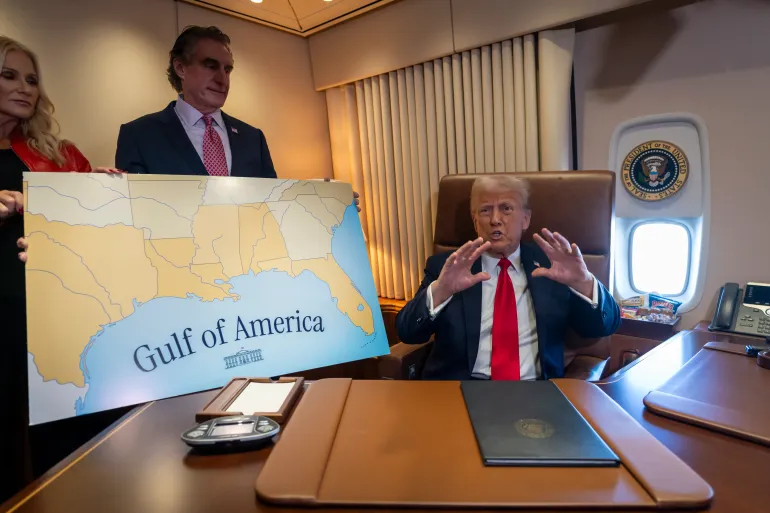
“It’s simple, if they charge us, we charge them,” Trump told reporters on Air Force One.
“If they charge us 130 percent and we don’t charge them anything, this won’t last forever,” Trump said.

According to data published by the U.S. government and the American Steel Institute, Canada is the largest supplier of steel to the United States, followed by Brazil, Mexico, South Korea, and Vietnam.

Canada is also the largest exporter of aluminum to the United States, with other major suppliers including China, Mexico, and the United Arab Emirates.
“Canadian steel and aluminum support key industries such as U.S. defense, shipbuilding and automobiles,” Canadian Innovation Minister François-Philippe Champien said in a post on the X website.
“This makes North America more competitive and safer. We will continue to stand up for Canada, our workers and our industry. ”
Australian Prime Minister Anthony Albanese said he plans to talk to Trump and will raise the issue.
Albanese told the country’s parliament, “We will continue to clarify Australia’s national interests to the U.S. government, and we believe it is also in the national interest of the United States, because tariffs are certainly not taxes on us, but on buyers of our products.” ”
According to trade data released by the United Nations, Australia exported about $237 million worth of steel to the United States in 2023 and about $275 million worth of aluminum to the United States the following year.
Trump’s latest tariff threat comes after he announced last month that he planned to impose a 25% tariff on all Canadian and Mexican goods and a 10% tariff on Chinese imports.
The U.S. president later agreed to delay measures against Canada and Mexico as the two countries pledged to do more to stop illegal drugs and undocumented immigrants from crossing the U.S. border.
Trump’s tariffs on China went into effect on Tuesday, while China announced retaliatory tariffs on U.S. exports.

US President Donald Trump hinted earlier this month that the EU could be the next country to face tariffs, claiming that the EU imports “barely” nothing from the US while the US “buys everything.”
“The EU has really crossed the line. What they are doing is simply atrocity,” Trump told reporters on February 2.
“I don’t have a specific timeline yet, but it’s coming soon.”
Asian stock markets reacted mixed to Trump’s latest remarks, with Japan’s Nikkei 225 down 0.1% as of 02:30 GMT on the same day, but Hong Kong’s Hang Seng Index and China’s Shanghai Composite Index up 1.2% and 0.3% respectively.