U.S. President Donald Trump said he would impose a 25% tariff on imports from the EU, claiming that the EU was established to “harm” the United States.
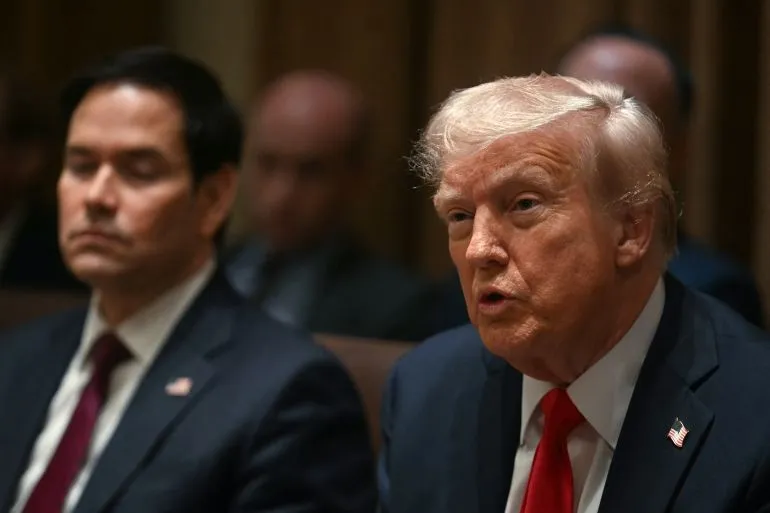
Trump said at his first cabinet meeting on Wednesday that the tariff decision had been made and would be announced “soon.”
Trump told reporters: “Generally speaking, the tax rate is 25%. The tax rate will be for cars and all other products. ”
Trump reiterated the common topic of unfair treatment of the United States in trade, claiming that the 27 member states of the European Union do not accept American cars and agricultural products, while the United States “takes everything from them.”
Currently, the European Union imposes a 10% tariff on US car imports, which is four times the tariff imposed by the US on European passenger car imports.
The United States also imposes a 25% tariff on imported pickup trucks.
Trump said: “To be honest, the EU was created to harm the United States. ”
“That’s what it’s for, and they’re doing a great job. But now I’m the president. ”
Trump’s remarks quickly elicited a response from the European Commission, which said the world’s largest single market region was a “big boon” for the United States.
“The EU will take a firm and immediate response to unjustified barriers to free and fair trade, including the use of tariffs to challenge legal and non-discriminatory policies,” a spokesperson said in a statement. ”
“The EU will always protect European businesses, workers and consumers from unreasonable tariffs.”
Other observers in Europe responded more sharply to Trump’s statements.
Gérard Arrault, the former French ambassador to the United States, said on X, “Trump hates the EU. ”
“He doesn’t know what the EU really is, but he hates it.”
Karl Bildt, who served as Sweden’s prime minister from 1991 to 1994, said Trump’s view of the history of the EU was “seriously distorted.”
Bilt said on X, “It was actually set up to prevent war on the European continent. ”
Trump’s latest trade offensive comes as tensions between Washington and Brussels escalate over the Trump administration’s “America First” policy in international affairs.
In addition to exacerbating trade tensions, Trump has also engaged with Russian President Vladimir Putin and verbally attacked Ukrainian President Volodymyr Zelensky, raising concerns about his commitment to European security and the future of the North Atlantic Treaty Organization (NATO).
Trump has promised a quick end to the war in Ukraine, and officials in Kiev and Brussels are concerned that the US president is inclined to reach a peace deal that is extremely favorable to Russia, including allowing Moscow to retain the Ukrainian lands it occupied during the invasion.
On Monday, German Chancellor-designate Friedrich Merz said Germany must move away from its “dependence” on the United States because “Americans, or at least this part of the Americans, do not care about the fate of Europe.” ”
Mertz’s Christian Democratic-Christian Social Union (CDU/CSU) coalition, which won the most seats in Sunday’s parliamentary elections, is seeking to form a coalition government. He said he was not sure if NATO would exist in its current form in the middle of this year, “or whether we have to build an independent European defense capability sooner.”
U.S. Secretary of State Marco Rubio sought to allay concerns about NATO’s future in an interview with Fox News on Wednesday, while calling on European governments to increase investment in their own defenses.
When asked about Merz’s comments, Rubio said: “My reaction is that NATO is not in danger. The only thing that puts NATO in danger is that our NATO allies have almost no troops, or the military is not very capable, because they haven’t spent a penny on the army for 40 years. ”
Rubio added, “These are rich countries, especially Western European countries. ”
“They have a lot of money. They should invest the money in national security, but they don’t. ”