August 15, 2025 marks the fourth year of the Taliban’s return to power in Afghanistan. The government’s claim that the country’s economic indicators have improved, while international reports highlight that Afghans still face deep challenges, has led to widespread discussion in Afghanistan and abroad about the direction of its economy.
Since the Taliban took over power in 2021 and international forces withdrew, Afghanistan has experienced a major economic turnaround: the country has fallen into severe international isolation and most of the external aid that was once the main source of funding for the country’s public services and development projects.
However, the current government has indicated that its domestic banking system has gradually recovered, bank deposits have risen, and the national currency exchange rate has stabilized over the past year.
But the reality is more complicated. Data released by the World Bank and the United Nations show that the country’s poverty rate remains high, and the shadow of unemployment and inflation looms over the market. Many merchants and farmers had difficulty obtaining cash, and market price fluctuations directly weakened the purchasing power of households.

Cash crisis
Despite the Afghan government’s claim that the situation of bank deposits has “significantly improved” and the currency has gradually stabilized, the data from independent agencies presents a completely different picture.
In February 2024, Deputy Prime Minister for Economic Affairs Mullah Abdul Ghani Baladar acknowledged that “some banks are facing liquidity problems” and called on bank owners to return home to support the local financial sector.
According to the World Bank report, total deposits in the Afghan banking sector fell by 9% in 2022 before recovering by 5.2% in 2023, reflecting some recovery after years of sharp declines.
At the heart of the crisis is that about $9.5 billion of Afghanistan’s central bank foreign exchange reserves have been frozen overseas since the Taliban came to power, severely limiting the government’s ability to inject liquidity into the market and promote investment and development projects.
Withdrawal limits
After the freezing of the foreign exchange reserves of the Central Bank of Afghanistan, the Taliban government had to impose restrictions on bank withdrawals:
- USD account: Up to $5,000 per week (previously capped at $2,000).
- Afghani account (national currency): up to 350,000 Afghani per week (previously 150,000).
- Large Accounts: There is no restriction for individuals with account balances exceeding 2 million afghans or 30,000 US dollars, and enterprises with account balances exceeding 3.5 million afghans or 50,000 US dollars.
These restrictions reflect the government’s attempt to control market liquidity, but they also weaken people’s ability to fully control their own money and increase their dependence on remittances and informal income.
Afghan economist Bashir Dudiyar said in an interview with Al Jazeera: “Frozen foreign exchange reserves and bank restrictions are the main obstacles to economic growth, they limit the government’s ability to invest in key projects and stabilize prices, so so-called currency stability is only relative under these conditions.” ”

Prices are rising
Afghan families are increasingly struggling to meet their basic needs. Rising prices not only affect food, but also cover fuel, electricity and medical supplies, and the impact on low-income households is particularly pronounced. Many say the amount of grain, cooking oil and meat they can buy has decreased significantly.
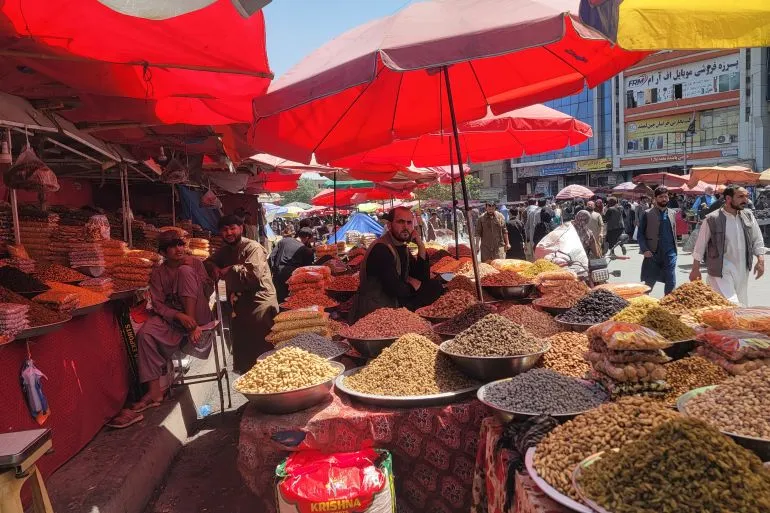
Hamid, a businessman at Kabul’s central market, told Al Jazeera: “The price of everything has risen, we can only increase the selling price to cover the cost, but customers simply have no money to buy it.” ”
Economists believe that inflation is related to a number of factors: disruptions in international aid, reduced remittances, and cash shortages in banks. Although the Taliban have tried to control prices and markets, these efforts have had little effect due to limited financial resources and insufficient investment.
According to the latest research released by the Afghan Economic Research Center, about 60% of residents have difficulty ensuring their daily basic food intake, and per capita consumption levels have fallen by 30% since 2021, highlighting the pressure on people’s livelihood.

Youth and unemployment
The youth unemployment rate is particularly prominent. According to data from the Ministry of Labor and Social Affairs of Afghanistan and the World Bank, the youth unemployment rate is around 16.7%, and a significant proportion of them are only employed in temporary or informal work.
Abdul Wadud Nasri, a university graduate in Kabul, said: “I graduated from Khaldan University two years ago, but I have not been able to find a suitable job and can only temporarily work in a small grocery store to make ends meet. ”
The rising cost of living and inflation force young people to rely on small businesses or overseas remittances to support their families, while small businesses are under immense pressure due to illiquidity and rising raw material prices.
Labor output
To alleviate youth unemployment, the government has promoted labor outsourcing programs, including sending labour to Qatar.
According to official data, about 1,800 Afghan workers have registered for employment in Qatar, one of the agreements reached between Kabul and Doha to create jobs and support the local economy through foreign exchange inflows.
The program is aimed at the unemployed, especially those returning from Iran and Pakistan, and covers 22 categories of occupations, such as electrical engineering, electric vehicle maintenance, cooking, hospitality services, bus driving, animal husbandry, etc. Registration was carried out in four major cities: Kabul, Kandahar, Herat and Nangarhar.
An official from the Afghan Ministry of Labor and Social Affairs, who asked not to be named, told Al Jazeera: “The goal of these projects is to provide alternative employment opportunities for young people to bring foreign exchange back home.” At the same time, the government is also expanding vocational training and skills certification to ensure that workers can meet the needs of overseas markets. ”
Development projects
The Taliban government claims that it has made “substantial progress” in economic stability over the past four years despite sanctions and isolation.
Afghanistan’s Minister of Energy and Water Abdul Latif Mansour said the government has funded major infrastructure projects from the national budget without relying on external aid. For example, the recently opened Bashdan Dam in Herat province cost US$117 million and can irrigate more than 13,000 hectares of farmland and generate about 2 megawatts of electricity.
In addition, the Kushtepe Canal project in the north is also a strategic focus, with the goal of converting about 550,000 hectares of desert land into agricultural land to enhance food security and increase wheat and vegetable production.
The government has also carried out measures such as inter-provincial road repair, irrigation network expansion, and promotion of wheat and vegetable self-sufficiency.
According to data from the Ministry of Finance, local bank deposits increased by about 15% year-on-year in 2024, thus being seen as a sign of public renewed trust in the banking system.
The country’s deputy economy minister, Abdul Latif Nazri, told Al Jazeera that the Afghan economy is “in a normal state”, with regular imports and exports, stable banking, controlled national revenues and normal government spending.
But economist Bashir Dudiyar warned: “The Afghan economy faces deep structural problems that cannot be solved by temporary measures or by relying solely on local resources. Rising inflation, lack of foreign investment, and international financial constraints make it extremely difficult to achieve sustainable growth in the short term. ”

Growth Challenges
Despite the modest economic growth, the challenges remained, particularly the threat to social stability, particularly unemployment.
According to the World Bank, Afghanistan’s GDP grew by 2.5% in 2024, mainly due to the agricultural sector. However, the manufacturing and service industries continued to shrink due to the poor business environment, limited exports, and reduced foreign aid.
Inflation improved slightly in 2025. By March this year, annual inflation was 0.3% and remained deflationary for most of 2024. This suggests that economic activity is starting to pick up, but long-term stability remains difficult.