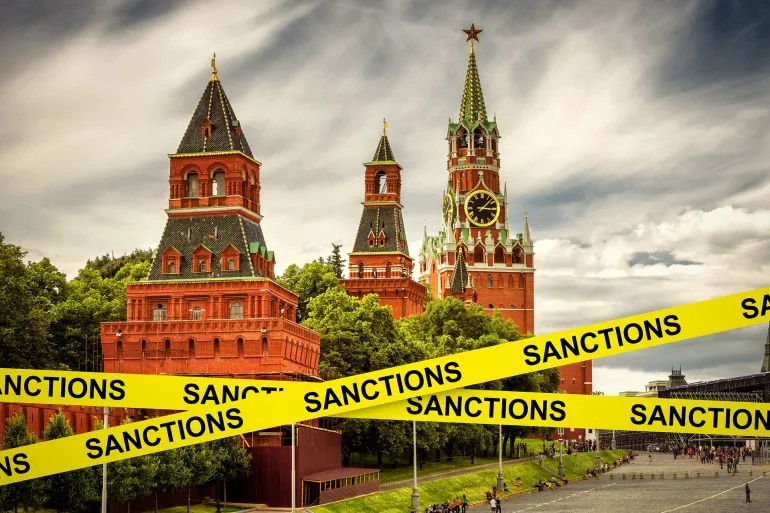
In a world where wars are no longer decided by weapons alone, economic sanctions have become one of the most dangerous tools of geopolitical influence. Secondary sanctions, in particular, are one of the most effective mechanisms, not only because they target direct adversaries, but also because they extend to everyone they deal with. Washington thus sent a subtle message to the world: “Whoever does not side with us is our enemy.” ”
In July 2025, the United States threatened to impose secondary sanctions on anyone who continues to cooperate with Russia, trying to isolate Moscow by hitting its cross-border business networks.
However, these threats are not without consequences, and observers believe they could undermine confidence in the global economic system and raise questions about who has the right to punish whom and under what international legitimacy.
Because every war has a price, even economic wars through banking and transfer networks rather than the military, the question today is: can the world withstand the consequences of such practices? In the face of ballooning public debt and internal political conflicts, can Washington afford the consequences of such a weapon that can harm both itself and its opponents?

In this report, we try to provide a comprehensive understanding of secondary sanctions: what are they? Why did the United States implement this measure alone? Who is the target? What are the risks of using it? This is achieved by analyzing numbers, reviewing intertwined interests, and deciphering the results of the U.S.-led global system since World War II.
What are secondary sanctions? How does it differ from direct sanctions?
To understand the nature of secondary sanctions, it is essential to distinguish them from direct sanctions:
- Direct Sanctions: Directly imposing sanctions on a country or its official institutions, such as prohibiting transactions with its banks, freezing its assets, or preventing the export of certain goods to it, aimed at exerting political or security pressure on the target regime. It is usually issued by a country or a coalition of nations against a specific party. For example, in 2012, the United States and the European Union imposed direct sanctions on Iran, including an oil embargo and a freeze on Iran’s central bank assets, to pressure Iran to halt its nuclear program.
- Secondary sanctions: Targeting third parties who deal directly with sanctioned countries. The punishment here is not because of the actions of the third party, but because of the financial connection between him and the punished party. These sanctions are intended to deter any party that may indirectly support the sanctioned regime or help it circumvent sanctions. In 2018, the United States imposed sanctions on a Chinese bank for financial transactions with North Korea, although the bank itself had not been subject to any previous sanctions.
Why can the United States impose these sanctions?
The power of the United States to impose sanctions, especially secondary sanctions, comes from complex dominances: financial, technological, military, and political. This dominance enhances its ability to influence national and global corporate behavior.
Financial dominance
- According to the International Monetary Fund (2024), the US dollar is used in global trade transactions by more than 85%, accounting for about 59% of central bank reserves.
- The United States effectively controls the SWIFT system, which processes more than $32 trillion in transfers annually and serves more than 11,000 financial institutions in 200 countries. As a result, any entity denied access to the system would face almost complete financial isolation.
Technology and business dominance
- American tech companies (Microsoft, Apple, Amazon, Google) form the cornerstone of the global digital infrastructure, giving Washington more than just money influence.
Military and political influence
- The U.S. military is deployed in more than 70 countries, defending strategic locations such as straits and energy corridors.
- It has extensive influence in international institutions such as the Security Council, the International Monetary Fund, the World Bank, and credit rating agencies.

These tools translate into effective sanctions mechanisms, including blacklisting entities, imposing hefty fines, freezing assets, blocking access to U.S. markets, or severing ties with the international financial system.
The nature of sanctions against Russia in 2025
The new U.S. sanctions focus on indirectly stifling the Russian economy by putting pressure on countries and companies that do business with Moscow in strategic areas such as energy, minerals and technology.
In July 2025, President Donald Trump announced a peace agreement within 50 days, otherwise tariffs of up to 100% would be imposed on countries that import Russian oil or gas.
At the same time, the US Congress is discussing a bill that would impose tariffs of up to 500% on Russian exports and impose secondary sanctions on financing or transporters of Russian exports.
Trump warned that companies doing business with Russia in technology and metals could be banned from the U.S. market or the international financial system.
Although the sanctions have not yet been officially implemented at the time of writing, the uncertainty of the timing of the sanctions is causing chaos in global markets and exacerbating economic uncertainty.
Russian Relations Network: Will Moscow really be isolated?
The challenge of secondary sanctions extends beyond the U.S. ability to impose sanctions and encompasses the complex structure of global trade relations. Russia maintains ties with major economies through extensive trade networks in strategic sectors such as energy, minerals and food.
These entanglements make attempts to isolate Moscow a test not only of Washington’s capabilities, but also of the ability of the entire global system to bear the cost of confrontation.
First: the energy sector
Russia is one of the world’s largest energy producers and exporters, exporting more than 7 million barrels of oil per day. According to the International Energy Agency, its oil and gas revenue will reach approximately $192 billion by 2024.
Russia’s exclusion from the metal supply chain will directly affect global industry, including Western countries
Here are the top importers of Russian oil:
- China: Imports from Russia in 2024 are about 2.17 million barrels per day, equivalent to 20% of its total oil imports. By 2023, China alone will account for 23% of global oil imports.
- India: Dependence on Russian oil has increased to about 1.8 million barrels per day, accounting for 35% of its oil demand.
- Turkey: Receives about 400,000 barrels of Russian oil per day.
- Brazil: About 12% of oil imports have recently come from Russia.
Although Europe’s dependence on Russian energy has declined since the start of the war, some countries, such as Hungary and Slovakia, still obtain oil through pipelines.
It is estimated that Russian gas will account for less than 19% of EU imports by 2024, compared with more than 40% before the war.
Second: fertilizers and agricultural products
Russia is a significant player in the global agricultural market:
- It is the world’s third-largest exporter of mineral fertilizers, with a market share of about 13%.
- It is the world’s largest exporter of wheat, accounting for nearly 20% of international trade.
- Europe imports about 5.5 million tons of Russian fertilizers annually, while the total global export volume is 17 million tons.
In July 2023, Russia withdrew from the grain deal and threatened not to renew the memorandum of understanding with the United Nations on fertilizer exports after July 2025 unless its requirements are met, such as connecting the Russian Agricultural Bank to the SWIFT system and restoring ammonia pipelines.

Third: strategic minerals
Russia is a major exporter of nickel, aluminum, and titanium, which are used in the automotive, aircraft, and electronics industries. Excluding Russia from supply chains in these regions will directly affect global industries, including Western countries.
Fourth: other strategic areas
- nuclear energy
Through Rosnegro, Russia controls more than 46% of the world’s uranium enrichment capacity and provides uranium enrichment services to nuclear power plants in 18 countries. Even the United States relies on Russia for about 25% of its enriched uranium imports.
- space
Despite Western sanctions, the cooperation between Roscosmos and NASA continued until 2022. Some countries rely on Russian satellite launch technology.
- Other agricultural products
Russia is a major exporter of barley, corn, sunflower seeds and oil.
- Wood and raw materials
Russia is the world’s leading timber exporter. Despite the decline in export volumes, the market still faces supply shortages due to a lack of Russian supplies.
All these connections make imposing any secondary sanctions against Russian partners a costly gamble that could harm allies before hitting Moscow.
Secondary sanctions against Russia’s partners are a costly gamble that could harm allies first and then Moscow.
How will the world be affected if secondary sanctions are imposed?
1. Economic impact
- Rising energy prices: Any disruption in Russian oil exports or trading will lead to supply shortages and higher global prices, affecting production and transportation costs and exacerbating inflation.
- Supply Chain Disruptions: Russia is a major supplier of energy, food, fertilizers, and metals, and any disruption in these sectors could lead to a widespread increase in commodity prices.
- Countermeasures: Affected countries, such as China or India, may take countermeasures, such as restricting rare earth exports or revisiting trade relations with Washington, exacerbating global tensions and undermining confidence in the international trading system.

2. Geopolitical influence
- Growing dissatisfaction with U.S. hegemony: Many countries believe that Washington pursues its economic agenda through sanctions, even against its allies, regardless of its own interests.
- Promoting Alternative Blocs: Blocs like BRICS+ and the Shanghai Cooperation Organization are becoming increasingly attractive to countries seeking to decouple their financial relationships from the US dollar.
- Deepening rifts with allies: Even U.S. partners such as Germany, India, and South Korea have expressed disappointment with the lack of coordination, especially after India announced in June 2025 that it would continue to buy Russian energy despite U.S. threats.
- Erosion of the legitimacy of international institutions: The imposition of sanctions outside the Security Council framework reinforces the impression that the international system is a tool of the West and does not represent everyone’s interests, prompting countries to seek more balanced alternatives.
US retreat: Can Washington cope with the shock?
The imposition of secondary sanctions not only threatens the global order but can also have a direct impact on the U.S. economy by:
- Pressure on U.S. multinationals: Many companies rely on suppliers and partners from countries that may trade with Russia, and sanctions place a direct burden on their operations and supply chains.
- Declining International Support: Sanctions against Washington’s partners could weaken their political ties and reduce the effectiveness of collective pressure.
- Domestic criticism is mounting: The U.S. government may face opposition from Congress and the business community, especially if sanctions lead to economic losses or job losses.
- Trade policy confusion: Uncertainty about “allow or prohibit” can confuse investors and undermine short- and medium-term investment decisions.
As a result, with public debt exceeding $37 trillion and ongoing disputes with the Federal Reserve over interest rates, the U.S. appears even less able to withstand additional external shocks.
Any fluctuations in energy or food prices can quickly turn into a domestic crisis, exacerbating inflation and burdening American consumers.
Where will the global order go?
There are signs that sanctions, despite their strength, are no longer exclusive to the United States, but are accelerating the formation of an alternative economic system that is gradually abandoning the dollar and SWIFT in favor of diversified centers of power.
Some analysts believe that Washington’s efforts to pressure opponents through sanctions are accelerating the global balance it is trying to block. With the gradual decline of traditional instruments of hegemony, the United States is reusing the tools of the unipolar era in an increasingly complex and interconnected world.
While the United States still has the upper hand, its unilateral approach to the crisis in the absence of genuine international consensus may ultimately lead to a new kind of isolation…… This isolation is not imposed on it, but is caused by its own practice.Source: Al Jazeera