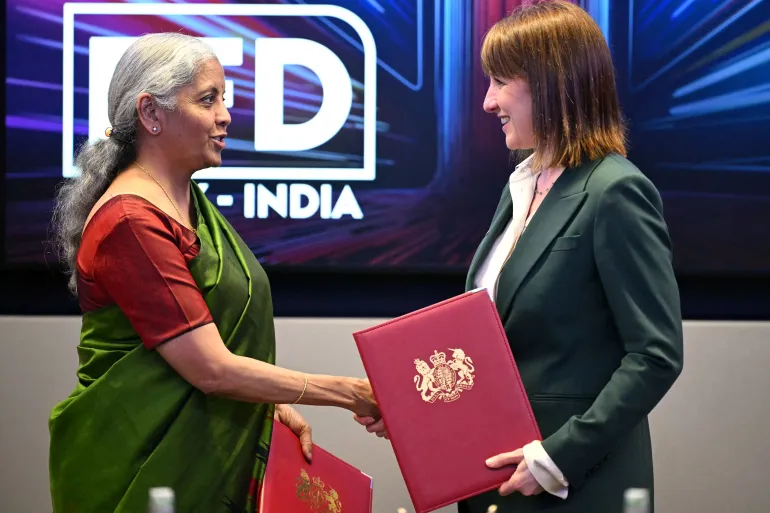
On Tuesday, May 6, London and New Delhi announced a free trade agreement after three years of interrupted negotiations. The move is seen as the most important diplomatic breakthrough after Brexit.
The agreement comes amid escalating global trade tensions, especially after U.S. President Donald Trump announced tariffs on several imports.
According to Reuters, the agreement aims to increase bilateral trade between Britain and India to 25.5 billion pounds (about $34 billion) by 2040, by improving market access and cutting tariff barriers on a large number of goods such as whiskey, chocolate, biscuits, lamb and salmon.
Reduce tariffs and stimulate exports
AFP pointed out that the agreement stipulates that 85% of the tariffs imposed by India on British goods will be eliminated within ten years. UK car import tariffs will be reduced from more than 100% to 10%, but the specific quota has not been officially announced.

British media quoted AFP as saying that whiskey and gin tariffs, which are key points of disagreement in the negotiations, will be reduced in stages from 150% to 75% and eventually to 40% within ten years.
Scotch Whisky Association chief executive officer Mark Kent said the tax cuts are expected to boost whisky exports by £1 billion (about $1.33 billion) and create 1,200 new jobs over five years.
Limited impact on GDP
Despite the political and strategic significance of the agreement, Reuters quoted the British government as saying that its direct impact on the British economy is limited, adding only £4.8 billion (about $6.4 billion) to the UK’s GDP of £2.8 trillion (about $3.73 trillion).
As the UK continues negotiations with the US over the elimination of tariffs on cars (25%) and most goods (10%), British Prime Minister Keir Starmer stressed to AFP that the India-UK deal remains the largest deal since Brexit in terms of market size and geoeconomic impact.