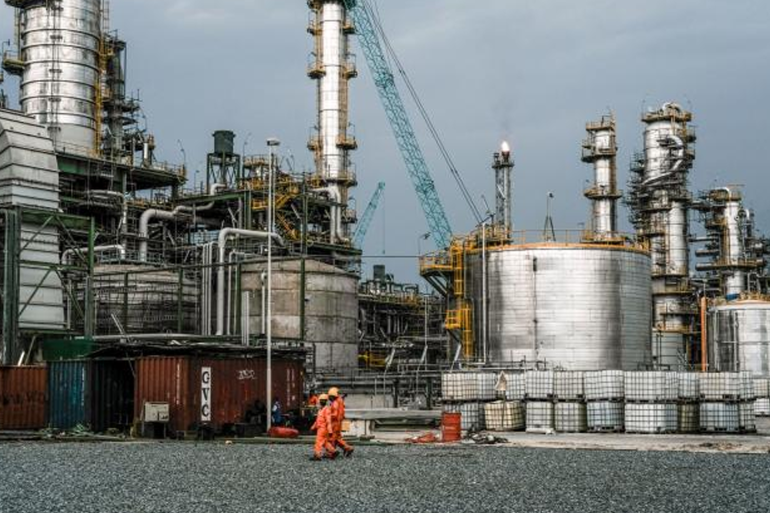
In late May 2025, Ghanaian President John Dramani Mahama launched a nationwide industrialization campaign aimed at accelerating the country’s economic growth and development. The movement supports his “round-the-clock economy” policy, which aims to create jobs and stimulate local businesses, which in turn boosts manufacturing and agricultural production.
President Mahama’s actions reflect the trend of West African countries revitalizing their industrial sectors in recent months, including the West Africa Industrialization and Trade Summit 2025, scheduled for October 2025 in Lagos, Nigeria, with the theme “Accelerating the Sustainable Industrial Revolution in West Africa for Economic Prosperity.” The summit is expected to serve as a regional platform for developing practical strategies for industrial development and trade diversification in West Africa.
A key driver of industrialization in West Africa
West Africa is strategically located as a bridge between Europe and Africa, providing access to emerging markets and resources. West Africa’s coastline is home to significant seaports, such as Lagos in Nigeria, Abidjan in Côte d’Ivoire, and Tema in Ghana, which are important export hubs for manufactured goods and import hubs for industrial inputs.
The region’s industrialization process is further driven by the region’s growing awareness of the strategic importance of its resources (e.g., oil, natural gas, minerals including gold, iron ore, diamonds and rare earth minerals) and the enormous potential of its agricultural products (e.g., cocoa, palm oil, rubber and cotton).
This growing perception is driving the region’s efforts to shift to value-added products, exploring ways to process these raw materials in the region rather than directly exporting them for a larger share of value. The importance of this last point is that a significant portion of raw materials are exported to other countries in West Africa, which has negatively impacted the region’s development and economic growth. Some of the region’s industrialization efforts are evident in Ghana and Côte d’Ivoire, which are seeking to process cocoa into chocolate and other finished products; while Nigeria has been working in recent months to convert its lithium mines into components for new energy vehicles.
A young and growing population can expand West Africa’s middle class, stimulate demand for consumer goods, and inject strong impetus into local manufacturing. The growing young population may also provide significant human capital advantages to labor-intensive industries, such as light industry, textiles, and agricultural processing, which are crucial to the region’s early stages of industrialization.
The latest data show that West and Central Africa have the youngest populations in sub-Saharan Africa, which further confirms the above argument. The African Development Bank also estimates that Africa’s median age population (19 years) could increase its GDP by $47 billion if it were used rationally.
The region’s industrialization efforts encompass diverse and specific industrial policies, including initiatives to attract foreign direct investment from various countries, establish industrial parks, and improve the business environment. Additionally, the region has seen significant investments in critical infrastructure, including transportation networks (especially roads, ports, and airports), energy (including renewable energy projects and nuclear energy development), and digital infrastructure.
At the same time, resource extraction (mining, oil and gas) remains crucial in West Africa, while other key industries driving growth in the region include agricultural processing, which converts agricultural products into high-value commodities such as cassava into ethanol and starch, and cocoa into chocolate.
In addition, the development of light industry, textile, clothing, pharmaceutical, and emerging automotive industries in the region is also intensifying. Some countries in the region are also taking advantage of its significant renewable energy potential, such as solar, wind, and hydropower. Others are restructuring their traditional energy management systems, such as the ongoing oil and gas development projects in Ghana and Senegal, with the goal of positioning these countries as energy hubs. In addition to the booming tech industry, innovation hubs and startups are also driving the local e-commerce and telecommunications industries.
Emerging Industrial Centers and Initiatives
Industrial renaissance and national initiatives have fueled the rise of specific regions and corridors in West Africa and made them industrial hubs. The rise of these centres has been driven by industrial policies of ECOWAS (Economic Community of West African States), such as the Common Industrial Policy for West Africa 2010-2030, which aims to increase the region’s local raw material processing rate to an average of 30% by 2030 and to increase intra-regional trade in manufactured goods to 50% of total regional trade.
Nigeria’s development in these centers and industrial corridors leads the whole of West Africa. In recent years, the country has made a significant push to diversify its economy to move away from dependence on crude oil. The government led by its current president, Tinubu, has adopted a “Nigeria First” policy, prioritizing local production by imposing tariffs, quotas, and bans on certain imports. As a result, the country’s non-oil exports reached $1.7 billion in the first quarter of 2025, an increase of 25% compared to the first quarter of 2024. Cashews, cocoa and their derivatives, urea and fertilizers are the focus of these efforts.
Nigeria’s emerging hubs include Kano in the northwest of the country, whose industrial initiatives include the “Special Program for Agro-Industrial Processing Zones”, which aims to attract private sector investment in value-added agricultural processing by providing infrastructure, services and policy support within designated areas.
Abia, located in southeastern Nigeria, is known for its textile and agricultural industries. Ogun, located in southwestern Nigeria, is also one of the country’s emerging industrial hubs, home to many manufacturing businesses and steel mills of all sizes. In addition, Nigeria has Lagos, the traditional economic center that has recently entered the oil industry through the Dangote refinery.
In addition, the country has the Abidjan-Lagos Corridor – a $15.6 billion multinational road project. The construction of the regional group is expected to continue until 2026 and be completed in 2030. This corridor connects 7 cities in West Africa: Abidjan, Takoradi, Accra, Lomé, Cotonou, Portonovo and Lagos. It also passes through five countries: Côte d’Ivoire, Ghana, Togo, Benin and Nigeria.
By 2050, the Abidjan-Lagos corridor is expected to create about 70,000 direct jobs and reach an estimated urban population of 173 million. This will stimulate economic growth and manufacturing development along the corridor, support emerging economic clusters along the corridor, and improve connectivity between urban centres, secondary cities, rural areas, and other West African transport corridors, particularly airports, roads, railways, and ports.
West African countries such as Côte d’Ivoire, Ghana, and Senegal are making significant efforts to revitalize their industrial sectors. Côte d’Ivoire continues to advance value-added cocoa processing to serve the wider African market. Countries such as Ghana and Senegal are also becoming major energy hubs in the region, thanks to their investments in oil, gas, and renewable energy.
In Ghana, the local government signed a US$12 billion agreement with a China-Ghana consortium in June 2024 to build an oil hub project – a project containing three refineries and five petrochemical plants that aim to enhance the value of Ghana’s energy sector. In Senegal, the African Development Bank Group approved a loan of up to $75 million to support resource-mobilized projects and industrial development programs.
Moreover, with the support of the World Bank Group, the West African Power Union initiative facilitated the construction and operation of more than 4,000 km of transmission lines between 2012 and 2024, connecting countries such as Côte d’Ivoire, Guinea, Liberia, Sierra Leone, Benin, Burkina Faso, Niger, Nigeria, and Senegal. The investment platform “Africa50” also collaborates with the West African Regional Stock Exchange to issue infrastructure project bonds and other financial instruments, aiming to mobilize long-term capital of regional investors for infrastructure development in the West African Economic and Monetary Union region, which includes Benin, Burkina Faso, Côte d’Ivoire, Guinea-Bissau, Mali, Niger, Senegal and Togo.
It is worth noting that despite facing some political and security challenges, the countries of the Sahel Union are increasing their industrialization efforts. For example, Burkina Faso is working to achieve its economic independence and food sovereignty through agricultural industrialization initiatives, as well as to enhance the value of local resources, such as increasing food production, establishing tomato factories and cotton production. Mali has also established 12 agricultural pillar value chains to ensure food self-sufficiency and strengthen the country’s position as a net exporter. Niger is advancing its development within the oil sector and is working to attract private sector participation in solar and agricultural modernization.
Seize the opportunity of global trade transformation
The current shift in global trade, characterized by protectionism, supply chain disruptions, and ongoing tariff disputes between major economies, presents unique opportunities for West Africa. One way to capitalize on these shifts is to diversify the region’s supply chain, making it a more attractive option for global manufacturers and buyers who are rethinking their sourcing strategies. The region’s abundant resources, growing workforce, and improving business environment may also present attractive opportunities for businesses seeking to establish new manufacturing bases. Another opportunity for West Africa is to achieve intra-African trade and economic integration through the African Continental Free Trade Area (AfCFTA) initiative. The initiative aims to strengthen trade links between African countries to reduce dependence on external markets, enable their member countries to build strong regional value chains, and attract investment by establishing a single market across the continent.
The Nigerian Finance Minister emphasized the potential of the African Continental Free Trade Area to reposition Nigeria as a competitive trade and investment destination, enhancing its supply chain diversification and local value-added. The Ghanaian government also wants to make greater use of the African Continental Free Trade Area to promote its regional exports, while Côte d’Ivoire believes that the initiative will increase the level of value-added cocoa processing in the wider African market.
The global demand for raw materials – especially strategic minerals critical to the green revolution, such as lithium and cobalt – provides a strategic advantage for West Africa as the region transitions from where these resources are mined to processed. In addition to the growing global demand for manufactured products in Africa and the expansion of Africa’s middle class, this also helps build a strong domestic market for manufactured goods, thereby reducing dependence on volatile overseas markets while promoting the development of indigenous manufacturing.
Additionally, there are growing voices calling on West African governments to explore trade agreements with the rest of the world and countries, as well as to strengthen ties with Asia and other emerging powers. These efforts aim to diversify the region’s economies and reduce its traditional dependence on Western countries, offset potential losses from its new tariffs and trade tensions, and expand access to diversified markets.
Emerging areas where West African countries can benefit from include “green manufacturing”, with discussions and policy recommendations focusing on renewable energy production (solar photovoltaics as well as energy storage), circular economy models, and the use of financial instruments such as green bonds to support sustainable manufacturing. AI is also seen as a key tool in Africa’s industrial strategy, as it can improve manufacturing and trade processes and remove old industrial barriers. This has also prompted African thinkers and intellectuals to call for some higher education institutions to be transformed into “innovative universities” aimed at preparing African youth for an AI-driven future.
Challenges in the face of opportunities
While the global trade transition presents numerous opportunities for West Africa, there are also challenges that may prevent the region from taking full advantage of them. The main of these challenges is the lack of infrastructure in some countries in the region, as well as problems such as inadequate transportation networks, unstable energy supplies, and logistical bottlenecks – which raise local production costs and limit competitiveness. The ongoing power outages in some countries in West Africa have severely affected local manufacturing and production, further confirming this view.
Some countries in the region lack skilled labor and technical capabilities, which may inhibit the development of innovative and advanced industries. Many businesses and governments in the region also struggle to access adequate and affordable financing to support their industrial projects, and there is also a large credit gap for SMEs in the region.
Equally challenging are the ongoing political instability and regional conflicts in parts of West Africa, such as the terrorist crisis and armed insurgency in the central Sahel, Lake Chad region, Benin and Togo, as well as the withdrawal of Burkina Faso, Mali and Niger from ECOWAS. These developments could hinder trade and investment within the region, disrupt trade flows, especially in the affected border areas, thereby undermining the local regional integration process.
Additionally, some West African countries have bureaucratic and corruption issues, which significantly hinder and make the business environment unfavorable. Complex regulations and laws, widespread corruption, and lack of transparency all deter local and international investors who can drive the region’s industrialization.
Despite the aforementioned industrialization initiatives and economic diversification efforts, many West African economies still rely on the export of raw raw materials, which makes them vulnerable to fluctuations in global commodity prices and limits their ability to create higher value. Additionally, while efforts are being made at the national and regional levels to develop robust industrialization policies, the effective and sustained implementation of these policies may also pose another challenge.
epilogue
In the process of industrialization, West Africa needs to explore value-added mechanisms, including the transformation of raw materials, strengthening regional integration, and creating a favorable business environment through the implementation of national and regional policies and investment in critical infrastructure. The region also needs to reform education and vocational training to promote skills transfer and capacity building, as well as diversify export markets and partnerships by ensuring an agenda that is mutually beneficial and supports its industries.
Finally, the region’s industrialization process also requires continued access to financing, which can be achieved by strengthening local financial institutions and encouraging lending to the industrial sector, especially SMEs. In addition, blended financing should be explored to provide alternative financing channels for enterprises, while strengthening partnerships between the public and private sectors.