Chinese Premier Li Qiang said at a business forum in Beijing last Sunday that China will “stick to the right direction of economic globalization” in response to “fragmentation,” alluding to the trade turmoil caused by US President Donald Trump.
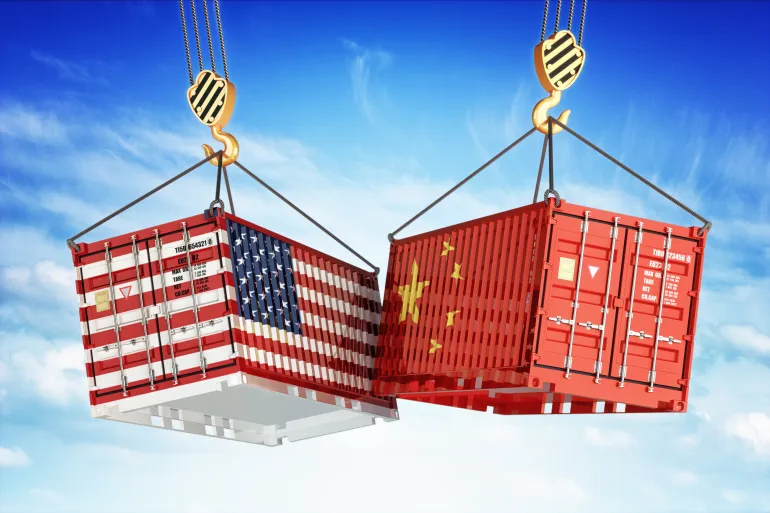
The China Development Forum was held against the backdrop of a renewed U.S.-China trade war, with Trump’s return to the White House posing a threat to China’s exports.
Since the end of the pandemic, China has been trying to steer the economy towards a more stable trajectory, including by promoting consumption.
Meanwhile, China is trying to emphasize its role as a staunch defender of the multilateral economic system, while Trump is pitting off major U.S. trading partners such as China, Canada and Mexico over tariff hikes.
Li Qiang told Chinese and foreign officials and business leaders: “China will firmly stand on the right side of history, stand on the side of fairness and justice, and take legitimate actions in turbulent times.” ”
He added that China will “adhere to the right direction of economic globalization, practice true multilateralism, and strive to become a force of stability and certainty.”
He warned that “global economic fragmentation is increasing” and said “instability and uncertainty are increasing.”
China’s openness
In recent weeks, China has shown openness to trade negotiations with Trump.
On Saturday, U.S. Senator Steve Daines met with Chinese Vice Premier He Lifeng during a visit to Beijing, a trip seen as an attempt to ease tensions between the two countries.
Daines is scheduled to meet with Chinese officials last Sunday, and the talks are expected to touch on controversial topics such as the flow of fentanyl and its chemical precursors from China into the United States, which have killed thousands of people.
Trump claimed that his decision to impose new tariffs on China was due to China’s failure to stop the shipment of these chemicals, which are an important part of the U.S. drug crisis.
But China insists it has taken drastic measures against the illegal production and trade of drugs, calling the problem a problem that the United States needs to solve on its own.
In a meeting with Daines, He Lifeng said that China “firmly opposes the politicization of economic and trade issues.”
He also added that China is willing to have “frank dialogue” with the United States to resolve differences, and pointed out that the two countries “have many common interests and broad space for cooperation.”
Since Trump took office in January this year, he has increased tariffs on Chinese goods exported to the United States by 20% across the board.
China’s exports hit record highs last year, but observers warn that turmoil in the global trading system could force China to look for other ways to boost economic activity.